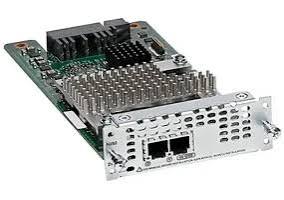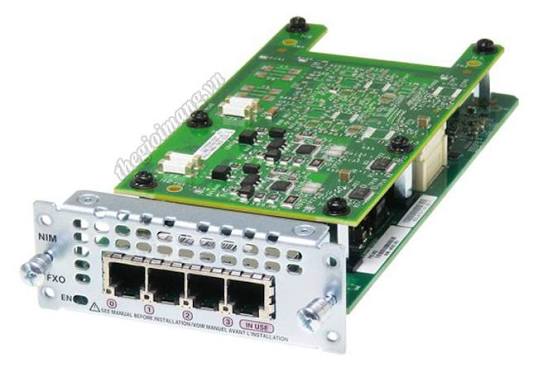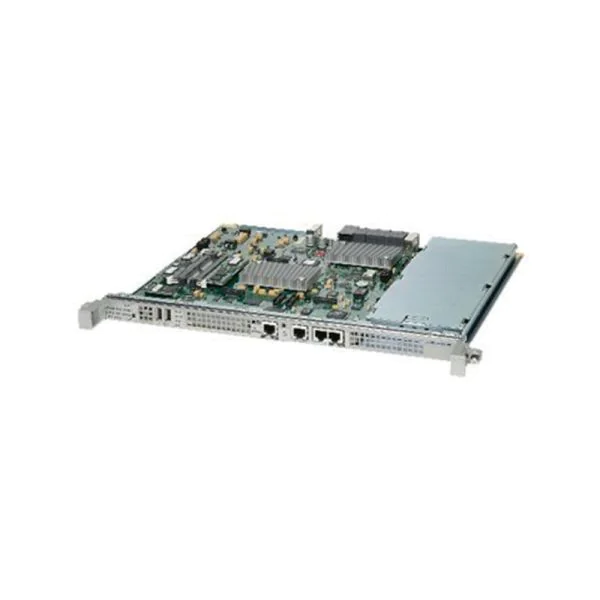
ASR1000-RP1, Cisco ASR 1000 Router Processor, Dual-core CPU/4GB DRAM/1GB Flash
$9,150
| Model | ASR1000-RP1 |
|---|---|
| Brand | Cisco |
| Chassis Support | Cisco ASR 1004 and ASR 1006 chassis (Note: The Cisco ASR 1002 chassis comes with the Cisco ASR 1000 Series RP1 built into the chassis.) (Note: Cisco ASR 1001, ASR 1001-X, and ASR 1002-X (part numbers ASR1001, ASR1001-X, ASR1002-X) have an integrated Route Processor built in to the chassis that is not upgradable) |
| Software Compatibility | Cisco IOS XE Operating System, which is based on Cisco IOS Software Release 12.2SR (Please consult your Cisco account representative for additional details.) |
| Software Protocols | Refer to Cisco IOS Software 12.2SR protocol support |
| Connectivity | Console port (RJ-45 connector) Auxiliary port (RJ-45 connector) 10/100/1000 Ethernet port (RJ-45 connector) Two RJ-48 connectors for BITS input clocks |
| Memory Options | Two 1-GB Double Data Rate 2 (DDR2) mini-DIMMs Two 2-GB DDR2 mini-DIMMs Upgradable memory from 2-GB to 4-GB DRAM |
| Storage Options | 40-GB HDD (RP1 only) 1-GB USB Compact Flash memory |
| Performance | Scalability up to 1,000,000 IPv4 routes or 500,000 IPv6 routes BGP RR Scalability up to 5,000,000 IPv4 routes or 3,000,000 IPv6 routes |
| Reliability and Availability | 1 + 1 redundancy in dual-route-processor configuration Support for online insertion and removal (OIR) Support for NSF and Stateful Switchover (SSO) Support for ISSU |
| MIBs | RFC 2737 compliant |
| Network Management | Telnet and Secure Shell (SSH) Protocol (command-line interface [CLI]) Console port (through the CLI) Simple Network Management Protocol (SNMP) RFC 2665 |
| LEDs | PWR – Power Green – All power rails are within specifications STAT – Status Green – Cisco IOS Software has booted Yellow – BootROM has successfully loaded Red – System failure or during boot process ACTV- Active Green – Active route processor STBY – Standby Yellow – Standby route processor CRIT – Critical Red – Critical alarm or during boot process MAJ – Major Red – Major alarm MIN – Minor Amber – Minor alarm LINK – Management Ethernet link status Solid green – Link with no activity FLASH green – Link with activity Off – No link DISK0 – Internal Compact Flash FLASH Green – Activity indicator Off – No activity DISK1 – External Compact Flash FLASH green – Activity indicator Off – No activity DISK2 – Internal HDD FLASH green – Activity indicator Off – No activity CARRIER – BITS interface Off – Out of service Green – In frame and in service Amber – Fault or loop condition |
| Physical Dimensions (H x W x D) | 0.92 x 16.7 x 14.19 in. (0.02 x 0.428 x 0.36 m) |
| Approvals and Compliance | Safety UL60950-1 and CAN/CSA-C22.2 No. 60950-1-03 Information technology equipment AS/NZS 60950-1 IEC/EN 60950-1 Information technology equipment 73/23/EEC Electromagnetic Emissions Certification Immunity |
| Network Equipment Building Standards | The module meets the following Networking Equipment Building Standards (NEBS): GR-1089-CORE GR-63-CORE |
| European Telecommunication Standards Institute (ETSI) | ETSI 300 386-1 – Levels for equipment with a “high priority of service” that is installed in “locations other than telecommunication centers” ETSI 300 386-2:1997 – Levels for equipment with a “high priority of service” that is installed in “locations other than telecommunication centers” ETSI 300 132-2: December 1994 – Power supply interfaces at the input to telecommunications equipment Sections 4.8 and 4.9 |
| Environmental | Storage temperature: -38 to 150°F (-40 to 70°C) Operating temperature, nominal: 41 to 104°F (5 to 40°C) Operating temperature, short-term: 23 to 131°F (-5 to 55°C) Storage relative humidity: 5 to 95% relative humidity (RH) Operating humidity, nominal: 5 to 85% RH Operating humidity, short-term: 5 to 90% RH Operating altitude: -60 to 4000 m (up to 2000 m conforms to IEC/EN/UL/CSA 60950 requirements) |
Get any Information:
Do you have any question or need quotation about this Product? Contact us now via Fast Response Chat or Contact me here.