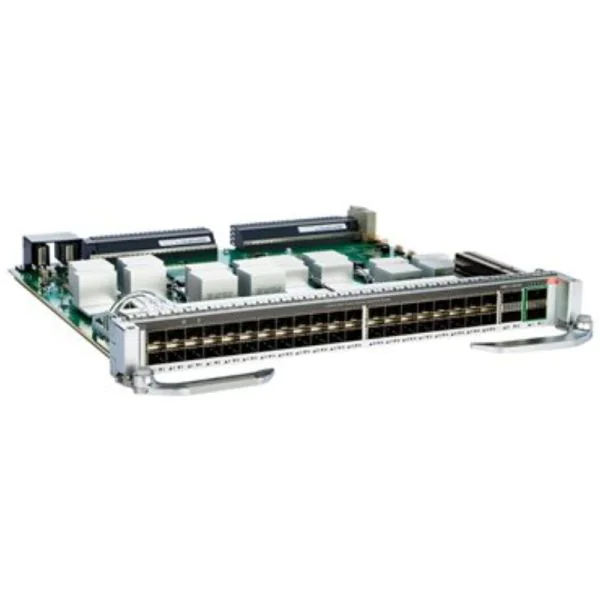
C9600-LC-48S, Cisco Catalyst 9600 Switch, 48x1G SFP/Hot-swappable/Layer 3
$14,866
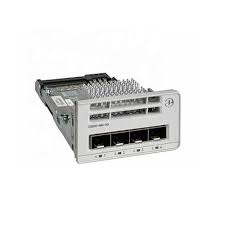
The Cisco C9600-LC-48S is a high‑density, enterprise‑class switch line card for the Cisco Catalyst 9600 Series chassis, designed for campus cores and aggregation networks in Asia, Europe, Africa, and North America. It delivers 48 1 Gigabit fiber SFP interfaces, giving distributors and system integrators a flexible option for building scalable fiber access in enterprise buildings, universities, and public sector networks. With up to 4.8 Tbps switching capacity and up to 2,256 Mpps forwarding rate, the C9600-LC-48S supports both IPv4 and IPv6 services, making it suitable for long‑term dual‑stack deployments.
This Cisco switch line card supports full Layer 2 and Layer 3 features, so integrators can build resilient campus cores with advanced routing, VLAN segmentation, and multicast. The modular and redundant design of the Catalyst 9600 platform helps reduce downtime and simplifies maintenance, which is especially important for distributors and managed service providers who support multiple customer sites. Low latency forwarding and jumbo frame support up to 9,198 bytes improve performance for data‑intensive applications, such as backup, storage access, and real‑time video.
Security is enhanced with 802.1X authentication, DHCP snooping, and Dynamic ARP Inspection to protect against common access‑layer attacks and unauthorized devices. These capabilities help enterprises and government customers meet internal compliance policies and regional regulations. Rich QoS features, including traffic classification, policing, and scheduling, allow precise control of critical traffic such as voice, collaboration, and business applications across diverse regional deployments.
For operations teams, the C9600-LC-48S runs Cisco IOS XE software, providing a consistent feature set, automation options, and programmability across the Catalyst portfolio. Management through CLI, SNMP, and RMON supports integration with existing NMS platforms used by distributors, small and medium system integrators, and large enterprises. The operating temperature range from 0 °C to 45 °C, along with RoHS, UL, and CE compliance, fits common installation standards in global data centers and wiring rooms. Power consumption depends on the overall chassis configuration, allowing network designers to balance performance and energy use based on site needs.
This Cisco switch line card supports full Layer 2 and Layer 3 features, so integrators can build resilient campus cores with advanced routing, VLAN segmentation, and multicast. The modular and redundant design of the Catalyst 9600 platform helps reduce downtime and simplifies maintenance, which is especially important for distributors and managed service providers who support multiple customer sites. Low latency forwarding and jumbo frame support up to 9,198 bytes improve performance for data‑intensive applications, such as backup, storage access, and real‑time video.
Security is enhanced with 802.1X authentication, DHCP snooping, and Dynamic ARP Inspection to protect against common access‑layer attacks and unauthorized devices. These capabilities help enterprises and government customers meet internal compliance policies and regional regulations. Rich QoS features, including traffic classification, policing, and scheduling, allow precise control of critical traffic such as voice, collaboration, and business applications across diverse regional deployments.
For operations teams, the C9600-LC-48S runs Cisco IOS XE software, providing a consistent feature set, automation options, and programmability across the Catalyst portfolio. Management through CLI, SNMP, and RMON supports integration with existing NMS platforms used by distributors, small and medium system integrators, and large enterprises. The operating temperature range from 0 °C to 45 °C, along with RoHS, UL, and CE compliance, fits common installation standards in global data centers and wiring rooms. Power consumption depends on the overall chassis configuration, allowing network designers to balance performance and energy use based on site needs.
Product Features
- ● Specially designed for Cisco Catalyst 9600 Series
- ● Module Type Line Card
- ● Port Configuration: Supports line cards with 48 x 10GE SFP+ with modular port configurations
- ● Switching Capacity Up to 4.8 Tbps, and Forwarding Up to 2256 Mpps
- ● High Availability upports Cisco StackWise Virtual technology and Provides enhanced support for network infrastructure
Product Applications
- ● Ensuring proper and stable installation of Cisco Catalyst 9600 Series switches in data centers
- ● Supporting network upgrades and expansions within enterprise environments
- ● Ideal for use in server rooms and networking closets to optimize space and performance
Specification
| Model | C9600-LC-48S |
|---|---|
| Brand | Cisco |
| Series | Catalyst 9600 |
| Port Count | 48 |
| Port Type | 1 Gigabit fiber |
| Interface | SFP |
| Switching Capacity | Up to 4.8 Tbps |
| Forwarding Rate | Up to 2256 Mpps |
| Protocol Support | IPv4, IPv6 |
| Layer Support | Layer 2 and Layer 3 |
| Redundancy | Modular and redundant design |
| Security Features | 802.1X authentication, DHCP snooping, Dynamic ARP Inspection |
| QoS Features | Classification, policing, and scheduling |
| Management | CLI, SNMP, RMON |
| Firmware | IOS XE |
| Latency | Low latency |
| Jumbo Frame Support | Up to 9198 bytes |
| Operating Temperature | 0 °C to 45 °C |
| Power Consumption | Depends on configuration |
| Compliance | RoHS, UL, CE |
Get any Information:
Do you have any question or need quotation about this Product? Contact us now via Fast Response Chat or Contact me here.